KONGREGATE / GAME DIRECTOR
TMNT:
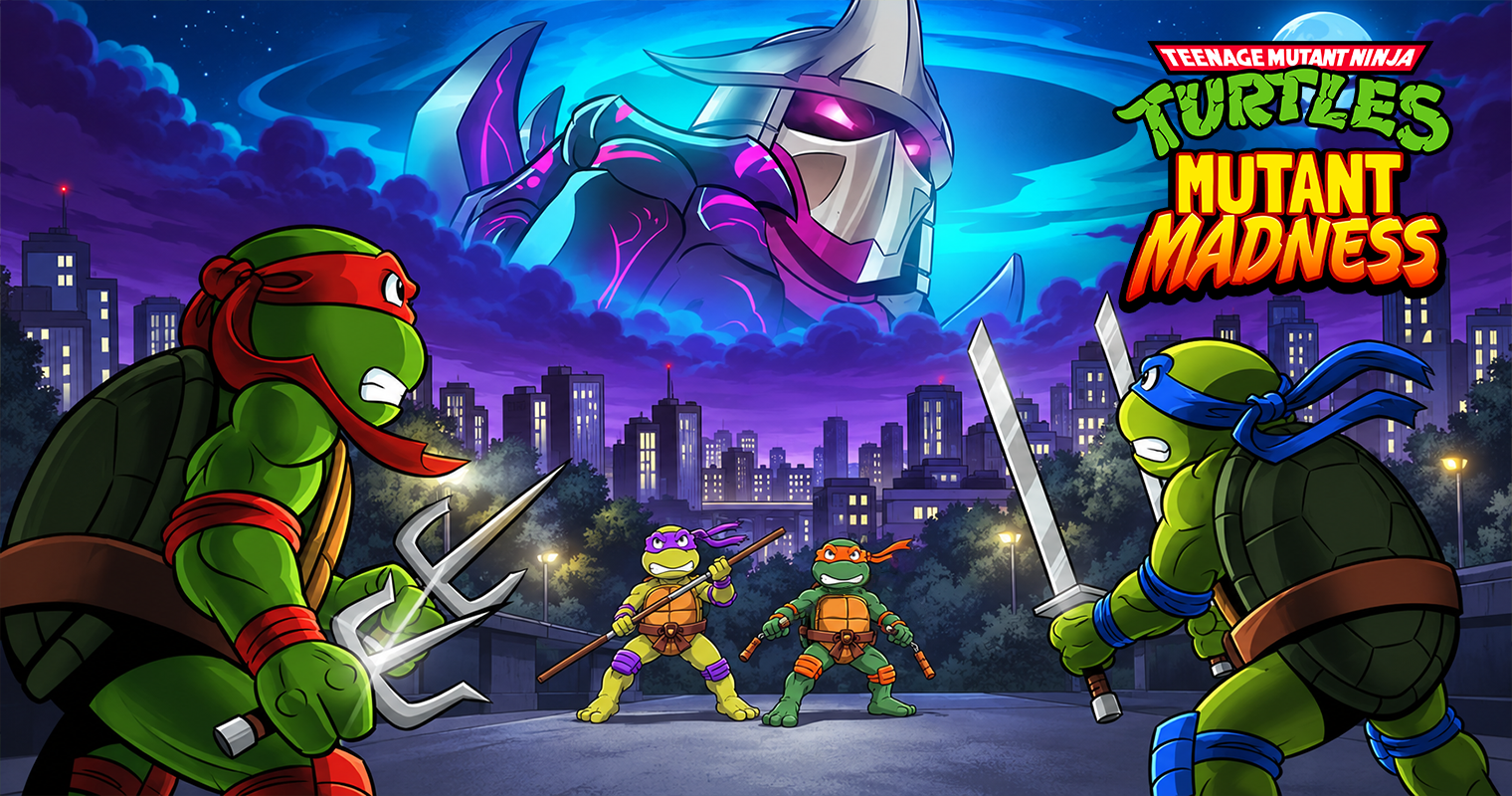
Mutant Madness
I oversaw a team of more than 25 across multiple disciplines, from production into live servicing.
- 25+ Team Size
- Oversaw contributors across all disciplines
- Hero Collector
- Our studio’s first Hero Collector RPG, a first step into a new genre
- Production → Live
- Was in charge of the team and game direction from early development and into live service
The Challenge
TMNT: Mutant Madness was our studio’s first RPG hero collector. We had years of experience making collectible card games, but needed to work out which lessons carried over and where we needed a different approach. We settled on AFK Arena as our primary reference while defining how combat, character collection, and idle progression would fit together. Much of the early work was deciding what kind of game we wanted to make and where we could offer something different.
Finding the Lair’s Role
Early versions of the Lair explored room placement and resource management. We considered whether neighboring rooms should affect each other and whether players could favor one resource over another through their building choices.
I guided the team through those options and ultimately made the call to simplify it. The characters, collecting them, and progressing them were the center of the game. Giving the Lair too much strategic weight felt like we were taking attention away from the real stars of the show. We settled on rooms that unlocked through campaign progression and generated resources to support it.
Giving Players Control
We went through several iterations of combat before settling on automatic battles on a 3D hex grid, with Ultimates that players could activate and aim manually. Targeting was one of our intended differentiators: it gave players more control and opened up possibilities for character design beyond the approaches we were using as references.
Michelangelo’s Ultimate is the example I remember best. He jumped to the selected location and damaged adjacent enemies, but then stayed there and continued fighting. Players could use it to get him past enemy defenses and onto a backline target. Where he landed mattered beyond the initial attack.
Making Character Roles Clearer
I designed and championed six role labels: Tank, Brawler, Blaster, Support, Trickster, and Skirmisher. They grew out of the characters my designers were making and the playstyles they were finding fun.
The goal was to describe those differences more precisely. Brawler and Blaster distinguished melee from ranged damage, while Support and Trickster separated helping allies from weakening enemies. Skirmisher described mobile melee characters like Michelangelo, whose abilities let them reach positions other characters couldn’t. The labels gave players clearer information for building squads and gave the design team a shared vocabulary for developing characters.
Giving Players a Next Step
I proposed adapting a quest system from Adventure Capitalist to help players find their next goal. Three quests stayed visible at the top of the screen: two long-term progression goals and one daily or session goal. Completing a quest replaced it with the next one in priority order.
I guided design and art through implementation and was the primary reviewer, setting the bar for completion. In our first playtest, we could immediately see players noticing the quests, following them, and enjoying checking off goals and collecting rewards. Broader audience tests also showed longer sessions, further progression, and higher retention. It remains one of the systems I’m most proud of because it meaningfully changed how players engaged with the game.
Working with Nickelodeon
I was the primary contact with Nickelodeon, meeting weekly with their representatives to share progress, review character selections, and lead character approval discussions. I also visited their headquarters to meet the team in person, including their VP of Games.
Establishing the art style and story took considerable back-and-forth. Nickelodeon trusted us with mechanics and gameplay, but had stronger expectations around which characters appeared, how they looked, and their skill names and visuals. My role was to represent the game and the team in those discussions, working with Nickelodeon toward a direction that met their expectations for the Turtles.
SEE THE GAME