SYNAPSE GAMES–KONGREGATE / GAME DIRECTOR / LEAD DESIGNER
Spellstone
A collectible card game I helped build, launch, and keep growing.
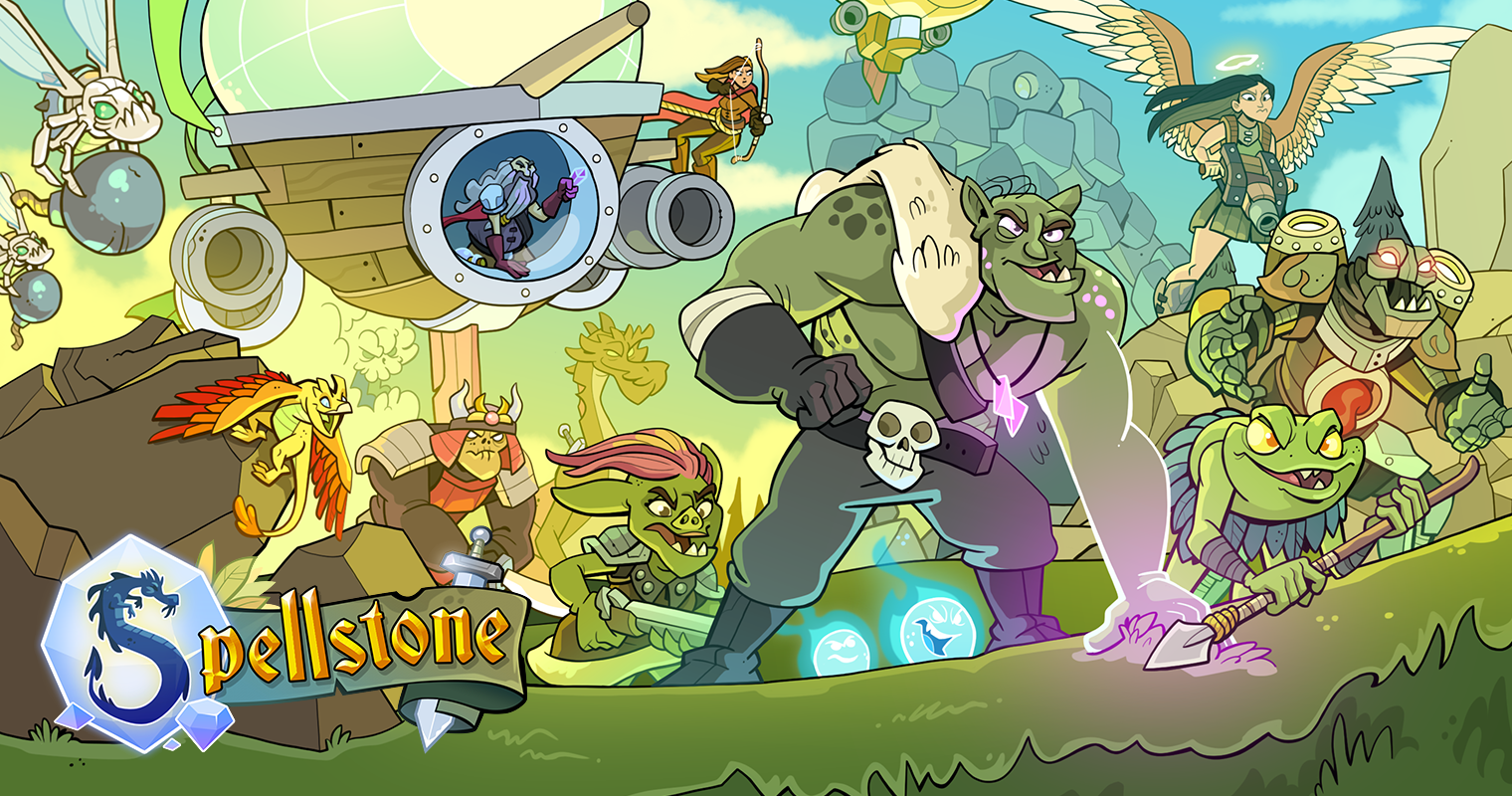
2014 / ESTABLISHING THE GAME
Building Spellstone’s Identity
When I joined Synapse Games in 2014, the studio wanted to make a fantasy counterpart to its successful card game, Tyrant Unleashed. There was concept art and a handful of cards, but Spellstone still needed a direction, a structure, and a complete set of cards for launch.
I helped establish a visual identity for its three factions. Chaos was built around fire, aggressive creatures, and red. Wyld leaned into nature, druidic themes, and green. Aether took more exploration before finding its identity in air, celestial beings, defensive magic, and blue. I carried that direction into card art descriptions, explaining what each card represented, what it was doing, and supplying references before reviewing the artwork that came back.
I also established the original tribes: Frog, Elemental, Angel, Undead, Dragon, Avian, and Goblin. These gave us another layer for storytelling and world building while supporting card synergies and deck-building goals. Later additions like Seafolk, Insect, and Mecha expanded that foundation as the game grew.
2014–2015 / DEVELOPMENT & LAUNCH
Designing the Standard Set
For a game like Spellstone, I start with the structure. Before designing individual cards, I defined the mechanical skills and how they would be distributed across the three factions. Each needed its own identity while remaining balanced against the others.
Most skills had a “Primary,” “Sometimes,” or “Never” designation for each faction. Aether specialized in Barrier, shielding allies, while Wyld specialized in Berserk, which grew attackers as they dealt damage. Chaos used Weaken to reduce enemy attack, while Aether used Empower to increase allied attack. For particularly fundamental skills, “Never” sometimes became “Very Rarely,” but the structure still guided our decisions.
With those identities established, I built a skeleton of the cards we needed at different rarities and costs. From there, I designed, playtested, and adjusted the cards until the Standard Set took shape. That framework helped me evaluate each card as part of the larger set, including which strategies it supported and where it filled a gap.
LIVE OPERATIONS / SEASONAL DESIGN
Keeping the Card Pool Relevant
During live operations, I proposed and designed a seasonal format to keep deck building changing without relying so heavily on stronger cards. Each season focused on a tribe and lasted eight weeks, with a new season starting every four weeks. That meant two tribe seasons were always active, encouraging players to build around either tribe or find opportunities in their overlap.
Each season applied a positive global modifier to its tribe, sometimes increasing a stat and sometimes adding an ability. One Frog season introduced Poison Dart, a poison effect with random targeting similar to Bolt. It gave players a new puzzle: how could they build a Frog deck that made the most of that effect?
The format also gave our card releases a clear purpose. A Frog/Undead card could be particularly useful while those seasons overlapped, and a new Angel was more often being compared with other Angels than with the entire card pool. Shifting that spotlight considerably slowed power creep and gave existing cards new reasons to see play.
ONGOING / TEAM & PARTNER LEADERSHIP
Guiding the Game Across Teams
Spellstone was built and supported by a small multidisciplinary team. I began as its only designer, with internal and contract designers joining over time. My responsibilities combined hands-on card and event design with managing the people and work needed to keep the game moving.
As the studio grew and took on new projects, more of Spellstone’s development moved to Dedalord, our partner in Argentina. Toward the end of my time on the project, I met with them weekly while also working on other games. We reviewed their work, revenue, and player data, and I helped guide changes when the game was moving away from its goals.
When a season was tracking below monthly targets, I worked with the team on ways to strengthen the upcoming weeks. That could mean adjusting card releases, creating a special weekend event, running a sale, or bringing popular older cards back in a new box. My involvement had changed, but I remained responsible for helping the team make decisions that supported the game and its performance.
Spellstone in Action
Articles
Meet the Creative Team: Spellstone ↗
An interview with me and fellow members of the Spellstone team, published by The Indie Game Review.